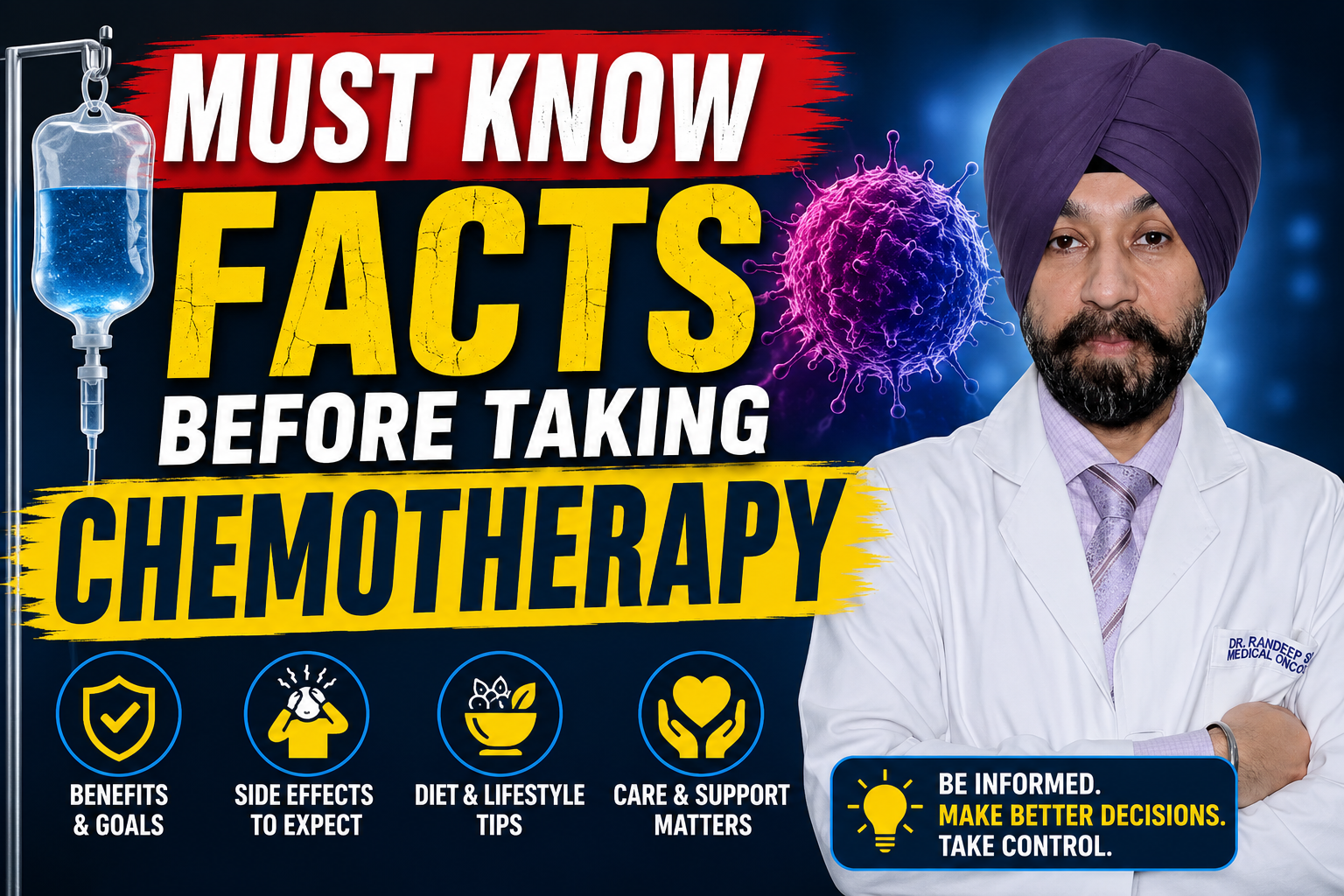
It is normal to have questions, concerns, and mixed feelings about receiving chemotherapy
1. Chemotherapy/ Target therapy are drugs which are used to kill cancer cells. There are many chemotherapy drugs and sometimes two or three drugs are given in combination in a standard protocol / regimen.
2. Chemotherapy can be given by different ways: oral/ intravenous / intramuscular
3. The commonest route is intravenous where drugs are mixed in saline and transfused over few minutes to hours depending on your type of cancer.
4. It can be administered through the cannula/ vivo/ PICC line or Chemo-PORT.
5. It is given while you are admitted in the hospital : Day care ( preferred )/ indoor wards
6. On the day of chemotherapy you will have to come to the hospital after having a light breakfast and not fasting ( empty stomach).
7. You will be asked to sign a form saying that you give your permission (consent) for the hospital staff to give you the chemotherapy.
8. You may need some tests before starting your chemotherapy. These will include blood tests and possibly urine or heart tests. Also some blood tests are repeated before every cycle at regular intervals. Always read your discharge summary carefully for any instructions by your treating doctor.
9. The schedule of treatment can vary from weekly to four weekly intervals. This may also vary as per side effects/ your tolerability or blood investigation reports .
10. Not all chemotherapy drugs produce side effects, and side effects vary depending on the treatment used and the person receiving it. People receiving similar treatments can experience different side effects.
11. Eat well during chemotherapy. A healthy, balanced diet helps keep you well nourished. Your doctor, nurse, and dietitian can help you develop a healthy diet plan
12. Dietary tips
- Eat small meals often, because not eating worsens the nausea
- Eat slowly. Take more of liquids and avoid food at extreme temperature
- Avoid oily , spicy, fatty and food with strong odours
- Avoid raw vegetables / fresh salad and fruits whose skin cannot be peeled off.
- Avoid stale / outside or roadside food
- If you have chewing or swallowing problem then take soft, semisolid, blended or mainly liquid diet.
13. Many people can continue their jobs or daily routine work with little or no change during chemotherapy. However, if necessary, try to adjust your work schedule or adapt your job to your treatment as per your stamina.
14. Wash your hands frequently and use a sanitizer before eating or brushing your teeth. Always wash your hands after using the bathroom. Avoid close contact with people who have a cold, the flu, open wounds.
15. You may feel more tired than usual during your chemotherapy. Fatigue can have many causes such as cancer treatment, loss of appetite, lack of exercise or anemia etc.
16. Rest and Relax when you feel tired.
17. If you develop any unexplained bruising or bleeding, such as nosebleeds, blood spots, red or blue rashes on the skin (petechiae) or bleeding gums, fever more than 1000C you should contact your doctor or the hospital emergency straight away
18. Not all chemotherapy results in hair loss. Chemo- therapy can cause a different amount of hair loss in different people. Hair loss may happen suddenly or gradually.
19. Hair loss tips
- If your hairs are likely to fall, it can help to have your hair cut quite short before treatment.
- Use gentle hair products.
- Try not to brush or comb your hair too roughly – use a soft or baby’s brush.
- Avoid using hairdryers, and other items like tongs and straighteners.Pat your hair dry gently
- Ask your doctor or nurse about wigs early on, so that the wig can be as close a match as possible to your normal hair.
- It is a good idea to wear a hat or head scarf when you go out.
20. Fell free to talk to your doctors about sexuality and fertility.