
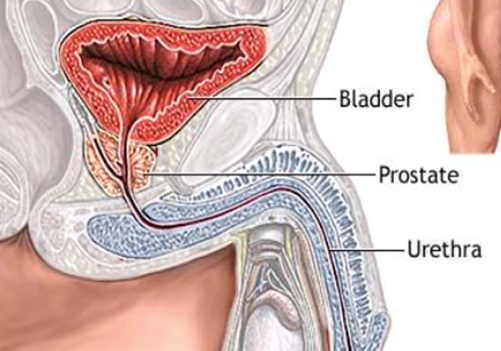
Q: What is Prostate?
A: The prostate is a small, walnut-sized gland that exists only in men. It is situated just below the urinary bladder.
Q: What is Prostate Cancer?
A: Prostate cancer is simply the uncontrolled and abnormal growth of cells in the prostate.Some men have BPH (benign prostatic hyperplasia) which is often confused with prostate cancer. BPH is not cancer, but is still an important condition that should be treated by your dcotor.
Q: What Are the Most Common Symptoms of Prostate Cancer?
- Frequency – Urinating much more often than normal.
- Urgency – Sensation that you need to urinate immediately.
- Nocturia – To urinate multiple times during the night.
- Hesitancy – Difficulty in starting the urine stream.
- Uncommon: Blood in Urine , Pain in back or hip
Q: Early Detection & Screening
A: There is no unanimous opinion in the medical community regarding the benefits of prostate cancer screening. It’s important for each man to talk with his doctor about whether prostate cancer screening is right for him.
Q: How Prostate Cancer is Diagnosed
A: DRE ( Digital rectal examination ) – finger test
PSA ( Prostate Specific Antigen ) – Blood test
If the above test raises a high index of suspicion of cancer then you have to undergo further test such as
MRI Scan of the pelvis
TRUS ( Trans rectal ultrasound guided Biopsy)
Bone scan ( To see for tumour spread to bones )
Q: Treatment Options of Early Prostate Cancer
A: The treatment options will depend upon your age, general health, symptoms, PSA level, extent of local spread of the tumour and the likely side effects of treatment
- Radical Prostatectomy: Surgical removal of prostate
- Radiotherapy with or without hormone therapy for 2-3 years
- Active surveillance: no treatment but close monitoring
Q: Treatment Options of Advanced Prostate Cancer
A: The treatment options will again depend on multiple factors as mentioned above.
1. Harmone Therapy: It lowers the level of testosterone in the body, either by using tablets or injections, or by removing the testes. It is used in this situation to try to shrink and control the cancer and relieve symptoms, with the aim of prolonging a good quality of life.
2. Chemotherapy : It is mainly used to treat advanced prostate cancer with nodes or liver metastasis or when the cancer is no longer being controlled by hormonal therapy (hormone-refractory prostate cancer). The chemotherapy drug such as docetaxel/ cabazitaxel are usually given by injection into a vein.
3. Radiotherapy : It is used in a case of advanced prostate cancer mainly to the painful bony sites where cancer has spread.
4.Bone directed Therapy : We use injections such as zolendronic acid or denosumab which help not only to control pain due to cancer spread to bones but also reduced the risk of bone fractures .
Q: Follow up after treatment of Prostate Cancer
A: After completing your treatment, your doctor will still want to watch you closely. It’s very important to go for all of your follow-up appointments. During these visits, your doctors will ask questions about any problems you may have and may do Serum PSA, and lab tests or imaging tests to look for signs of cancer or treatment side effects.