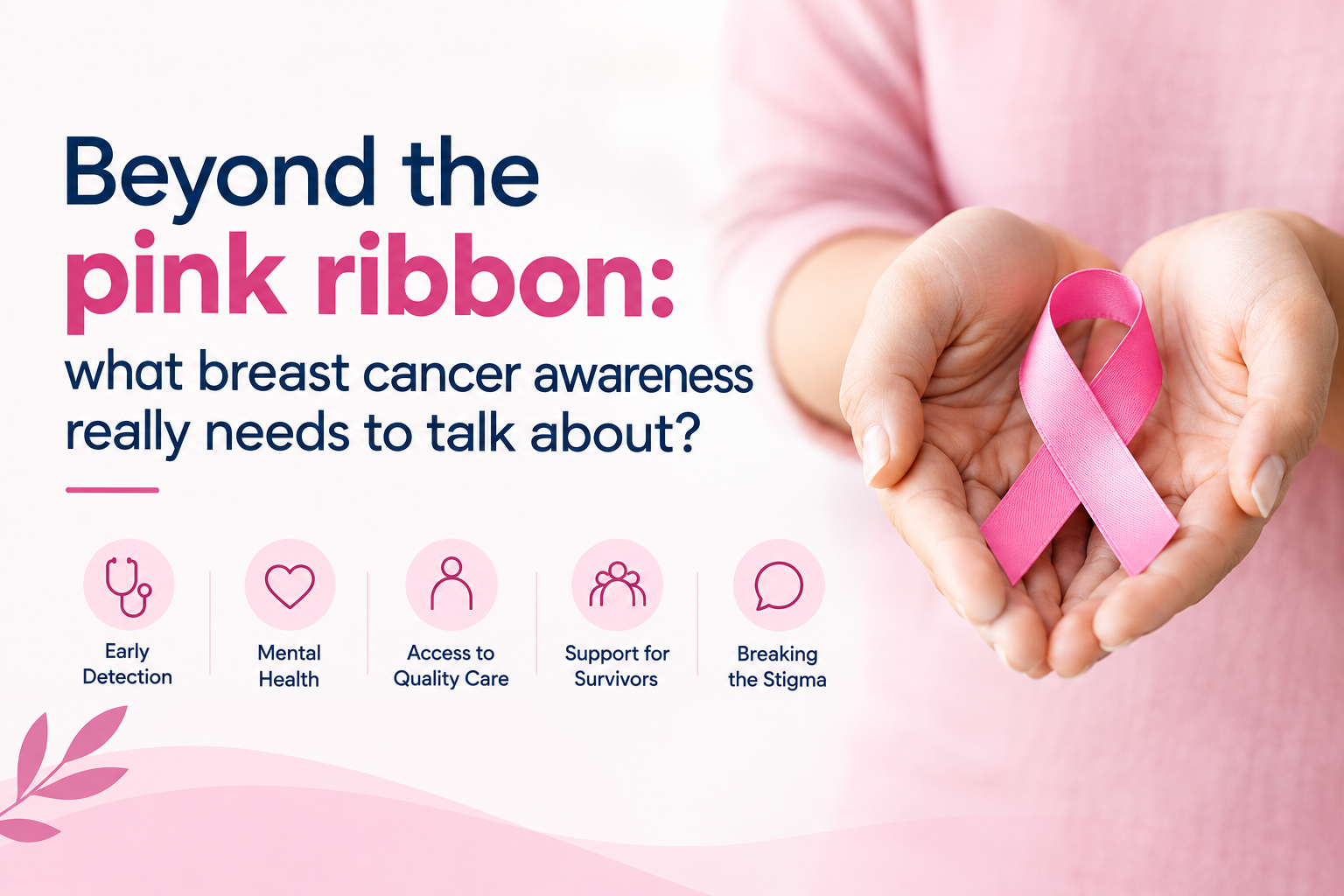
The world goes pink every October. Pink ribbons are posted on social media, in hospitals, schools, workplaces and public places as a reminder of breast cancer and the millions of people who are impacted by it. The pink ribbon has evolved over the years into a symbol of hope, solidarity and support.
But pink isn’t the only way to show your support for breast cancer awareness.
The actual goal of awareness is to initiate conversations that have the potential for making a difference. Its about understanding and knowing your risk and looking for medical advice when something does not feel proper. It’s also about helping people with breast cancer not only when they’re diagnosed, but during treatment, recovery and beyond.
Knowing Your Risk Matters: Information is Powerful
Breast cancer is not the same for all people. Risk may be affected by factors like family history, ethnicity, certain inherited genes, obesity and age. However, having no family history does not mean that a person cannot get breast cancer.
That’s why a discussion about breast health shall not be limited to women who have a family history of breast cancer. Knowing about their own risk may enable individuals to discuss their breast health with a clinician more knowledgeable, and to make informed choices in the absence of fear or misinformation.
Listen to Your Body
Paying attention to the changes in the body is one of the easiest and the most important things people can do. If there is a new lump or breast thickening , change in breast size or shape, changes to the skin or to the nipple, unusual discharge from the nipple shouldn’t be overlooked.
Not all changes in the breast are cancerous. However, if something feels unusual or does not go away, it is important to speak with a qualified healthcare professional. The message here is that it’s not a call to panic at every change, it’s not a call to disregard whatever does not feel normal.
Screening is also crucial to breast cancer awareness. It can be used to find breast cancer before it causes symptoms, although screening might not be done for everyone. What may be appropriate may be influenced by age, personal and family history, individual risk and local health care recommendations. An open discussion with a healthcare provider will give patients the information needed to make decisions about their health and their screening options.
A Diagnosis Changes More Than a Medical Record
When someone hears the words, “you have breast cancer,” life can change in an instant. The fear, uncertainty and a myriad of questions may ensue. What happens next? How will treatment be? What will be the impact on the working world and on family life? What will life look like afterwards? What are my survival chances ?
Physical and emotional challenges may come with treatment. Fatigue, pain and changes in body image or concerns may be experienced by some. Others may have anxiety, relationship, job or daily life challenges. There is also emotional stress that can be felt by family members and caregivers when supporting a loved one.
Care should not end at the hospital door. Assistance does not always need to be complex. In some cases, it involves hearing what others have to say without jumping to conclusions. It can be going to appointments, assisting with daily activities, offering space when needed, or just letting them know that they are not alone. A supportive work environment can also play a key role by providing flexibility while in treatment and recovery. Little acts of understanding and caring can help a hard day pass by a little more easily.
Life After Treatment Matters
Support should not be withdrawn at the end of treatment. While treatment is a significant event, it doesn’t automatically mean that all problems are solved. Living life after cancer may raise issues of long-term health, re-entering the workforce, relationships, body image and worry about recurrence.
It may take time to recover emotionally. Ongoing care can help individuals restore their lives and trust. Survivorship should be considered a part of the breast cancer story, not an add-on.
Beyond the Pink Ribbon
Maybe this is what it is to cross the pink ribbon. It is about making awareness personal and practical. Breast cancer is not just a number, campaign or colour. There is a person in the background for every diagnosis with a family, work, relationships, responsibilities, hopes and fears.
Remember, this Breast Cancer Awareness Month, don’t just wear pink. Break the silence and embarrassment around talking about breast health. Encourage them to be aware of their risks, identify changes and seek early medical advice.