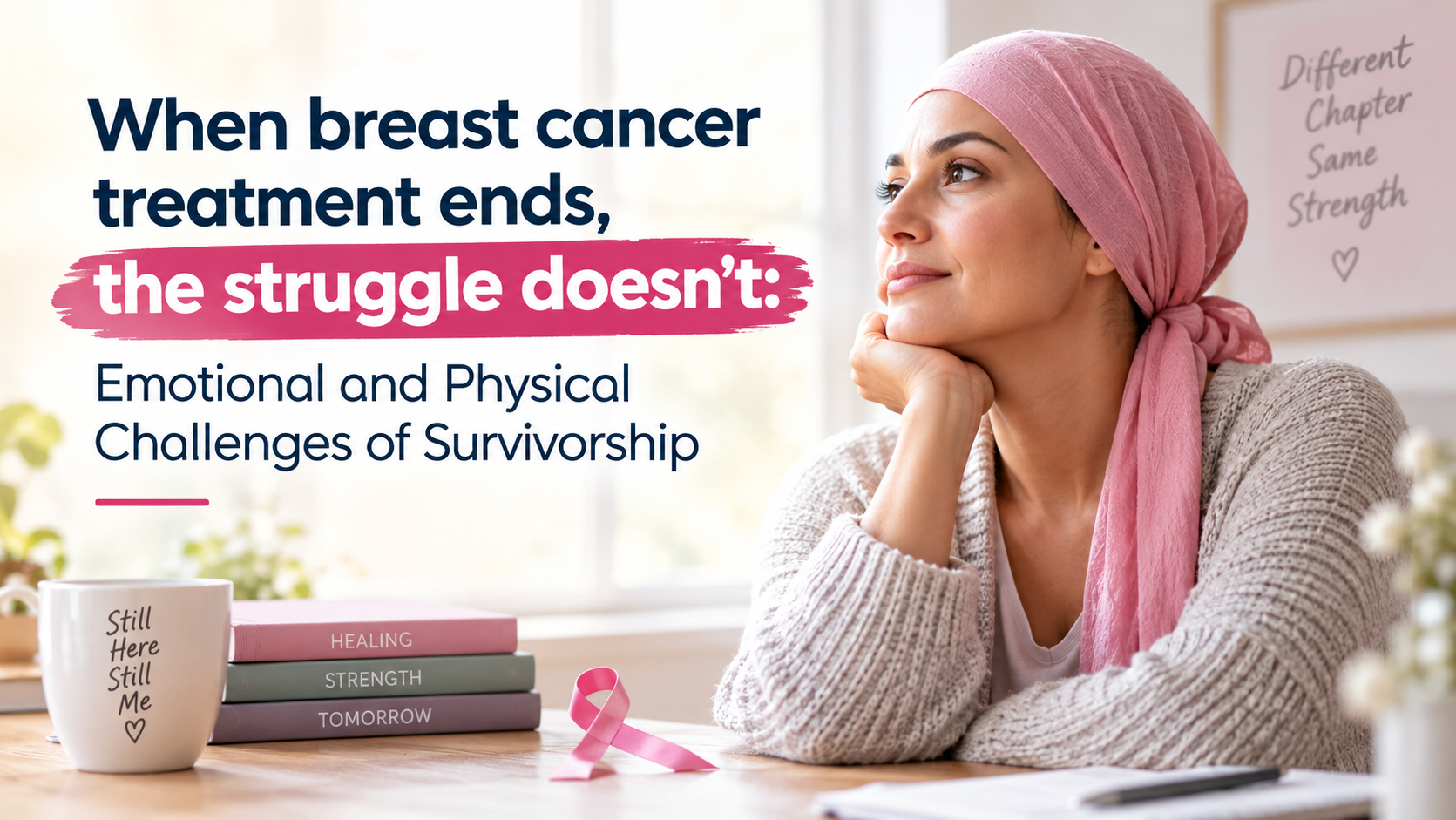
After breast cancer treatment has been completed, life returns to normal. Visits to the hospital taper off, medicine also reduce, and the individuals who were constantly on their guard start to breathe simpler. Friends and family herald a new phase and hope that the hardships are over. For many breast cancer survivors, however, treatment is not the end of the battle. In some cases, it is the start of a new, more subdued war: a struggle with fear, uncertainty and the struggle to learn to live in a new body and a new mind.
The Fear of Relapse:
Fear of recurrence is one of the most challenging aspects of survivorship. Survivors still may be concerned about the bumps, aches, and pains they experience that are different from those they are used to. You may start to think of things that cause you fear and anxiety: How can it be that I just have a headache, but how can it be that the cancer has returned?
Continuous scans, blood tests and follow-up visits can be emotionally draining. There may be worry or stress that is hard to describe to someone who’s never been through it before. To a survivor, it can be a reminder of all the things that have happened to her and all the things she fears.This worry is not a weakness. The journey from cancer survivor can alter someone’s notion of safety, health and the future.
Living with the physical consequences
Even though treatment is completed, physical side effects can last for months or years. Some survivors have lasting fatigue, joint pain, sleeping problems or hormonal changes. Some people experience nerve pain or discomfort after surgery, or lymphedema.
There can also be changes in the appearence that impact self-confidence. Hair may regrow differently, scars may be present and loss or reshaping of the breast may affect the way a woman feels about her body. For others, it may be a problem with physical discomfort, diminished libido or lack of attraction to their partner.
These experiences are so personal. A woman may be thankful to be alive and at the same time mourn the body, energy, or normalcy she had prior to her cancer diagnosis. Both emotions can be experienced at the same time and neither lessens her strength.
The Loneliness Behind the Smile
One of the lesser talked about things of survivorship is loneliness. Throughout the treatment, support can come in the form of phone calls, visits to the hospital, meals, and letters of encouragement. But after treatment, the attention can start to wane. Individuals assume that the survivor is fine and don’t give thoughts to the difficulties that may be ongoing.
They may feel pressured to be positive, particularly if others tell them how grateful they are to have survived treatment. Consequently, they may try to suppress their feelings of anxiety, sadness or frustration, often to prevent their relatives from worrying about them.
Living with the cancer experience
Moving forward doesn’t mean forgetting about cancer, It’s about seeking peace with uncertainty, but not letting it take over your life.
Family and friends, counsellors, and breast cancer survivor groups can provide emotional support that can make a difference. Adopting healthy habits, engaging in gentle physical activity, getting plenty of rest and having honest, supportive discussions with health-care professionals can also help survivors cope with the effects of the trauma that they have endured. Any anxiety, depression or physical symptoms that persist should not be ignored, and psychological and/or medical help should be sought.
Being a breast cancer survivor isn’t just the day after the final treatment. It’s the process of regaining trust, finding happiness and accepting a future that may be less predictable than it once was. Living with breast cancer is more than just living in order to survive. It means being given the support, understanding, and space to feel alive again.